
Our Forex Trading Course in Lahore is a practical, beginner-friendly programme taught by a trader with 6+ years of market experience. It costs Rs 1500, runs for about one month and comes as 8+ hours of on-demand video with lifetime access, so you can learn from Lahore or anywhere in Pakistan at your own pace.
You will learn how currency pairs move, how to read charts, how to protect your capital and how to stay calm when a trade goes against you. Forex trading carries real risk and no course can promise profits. What we offer is a clear, honest framework and plenty of practice on demo accounts before any real money is involved.
An introduction to my trading style & the lessons you’ll learn within the course.
An introductory chapter to the importance of trading mindset.
Lessons:
1 – Mindset Introduction
2 – Emotional Factors
3 – De-programming your mind
4 – Concluding mental factors
The exact risk management systems I use to balance my profits & losses to win long-term.
Comprehensive technical analysis course teaching my systems for day trading & scalp trading. Teaching you the concepts & then providing full chapters on applying these concepts into a strategy, step by step.
Every trader is different. In this chapter I guide you through developing your very own personalised trading plan using the strategies you’ve learned.
The next natural step to grow your career is to get funded with $200,000+ from a prop firm. Once you’ve mastered a strategy that wins, I’ll show you how to max your allocation with prop firms & get access to 6-figures of trading capital.
Many people in Lahore first hear about forex from a friend, a social media clip or a signal group, and then jump in with a live account. That is usually where the trouble starts: no plan, no stop-loss and decisions driven by hope. A structured course exists to fix exactly that.
A good course gives you the basics in the right order: what a currency pair is, how leverage and margin work, how to size a position, and how to review your own trades honestly. It also saves you months of trial and error, which in forex is often paid for with your own savings.
Our course is built around that idea. It is taught in simple language, priced at Rs 1500 so it is easy to try, and focused on habits that keep you in the game rather than on get-rich-quick promises.

Professional Trader
Our certified trainers have years of experience bringing you insider insights and industry-tested strategies.
Learn anytime, anywhere with flexible online access. Empower yourself with skills that fit your schedule, wherever you are!
Unlock new opportunities and boost your career potential with skills designed for growth. Empower your journey to success today!
Get dedicated, premium support whenever you need it. Our experts are here to assist you every step of the way for a seamless experience!

The course takes you from zero to a working trading routine. You start with what the forex market is and who takes part in it, then move through technical analysis, risk management, trading psychology, platform skills and finally building a personal trading plan.
Every module ends with something you can practise: marking levels on a chart, calculating a position size, or journalling a demo trade. The lessons are recorded, so you can pause, rewatch and revise as often as you need. The course level is listed as Advanced, but beginners follow it comfortably because each idea is explained from the ground up.
The programme is split into short video lessons totalling more than 8 hours, grouped into clear chapters: introduction, trading psychology, risk control, technical analysis and trading systems, and your own trading plan. Each chapter builds on the previous one, so it is best taken in order.
Most students finish in about a month by watching a few lessons per week and spending the rest of their time practising on a demo account. You are free to go faster or slower, since access is for life. Once you finish you receive a certificate of completion, and you can return to any lesson later when you want a refresher.
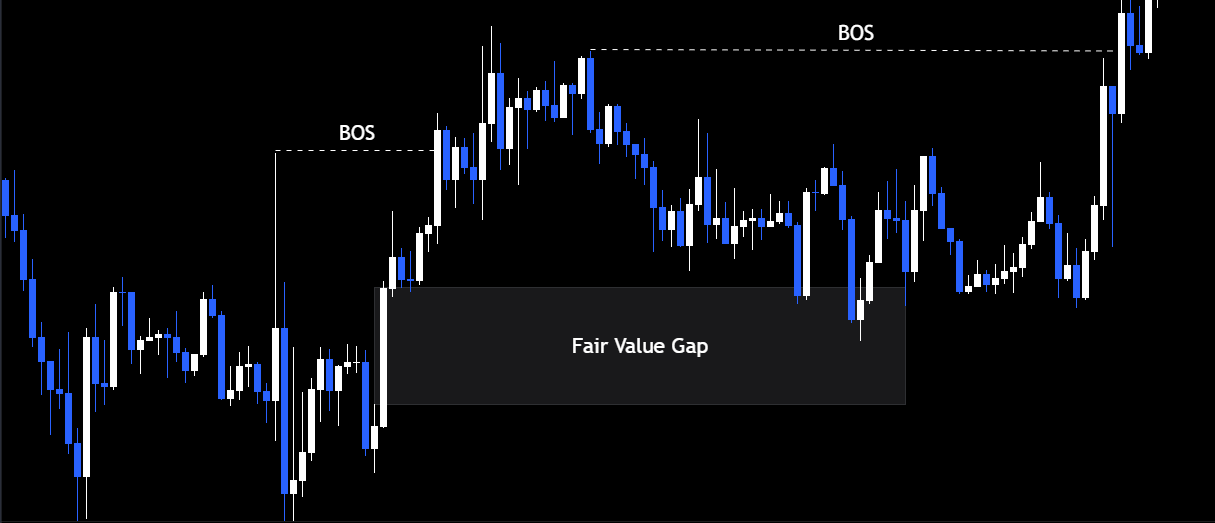
Technical analysis is the skill of reading price charts to understand what the market is doing and where it may react. In this course you learn trend direction, support and resistance, key levels, moving averages, RSI, Fibonacci retracements and price action, along with Smart Money Concepts such as liquidity and order blocks.
The aim is not to pile ten indicators on one chart. It is to build a simple, repeatable way of reading the market so that each trade has a reason, an entry, an exit and a stop-loss before you click anything. Indicators describe the past, so we treat them as guides rather than guarantees.
Risk management means deciding in advance how much you can afford to lose on a trade and on a day. Most traders who struggle do not fail because of a bad entry. They fail because one oversized loss wipes out many small wins.
You will learn to risk a small fixed percentage per trade, place stop-losses where the idea is proven wrong, and keep a favourable risk-to-reward ratio. These rules will not remove losses, because losses are part of trading, but they help keep them small and survivable.
Trading psychology is how you handle fear, greed, impatience and the urge to win back a loss. Strategy gets you into a trade; your mindset decides whether you follow your own rules once the trade is running.
The course covers common emotional traps, how to build a routine, and why keeping a trading journal is one of the most useful habits you can form. Many students tell us this chapter changed how they approach the screen more than any chart pattern did.
A trading platform is simply the software where you view charts and place orders. Learning it properly before trading live avoids costly mistakes such as wrong lot sizes, missing stop-losses or placing a buy when you meant to sell.
We walk through the interface step by step: adding charts, switching timeframes, using drawing tools, placing market and pending orders, and setting stop-loss and take-profit levels.
MetaTrader 4 (MT4) and MetaTrader 5 (MT5) are the two most widely used retail forex platforms, and most brokers offer at least one of them. MT4 is simpler and very popular for forex; MT5 adds more timeframes, order types and instruments.
In the lessons you see both on screen. You learn how to install them, open a demo account, customise your charts and manage open trades. Once you are comfortable with one, moving to the other takes only a few minutes.
A demo account lets you trade with virtual money in real market conditions. It is the safest place to test a strategy, make beginner mistakes and learn how orders behave, and it costs you nothing but time.
We encourage students to trade a demo account for several weeks and keep a journal before thinking about live funds. A word of caution: demo results do not guarantee live results, because real money brings real emotions. If you later go live, start small and use only money you can afford to lose.
Students usually choose this course for four reasons: it is affordable, it is taught by a practising trader with 6+ years of experience, it teaches risk first and it can be watched anytime. The course is rated 4.7 out of 5 by learners, and you keep access for life.
You also get the Prop Firm Challenge Secrets material, a certificate on completion and entry to our WhatsApp signal group. We do not promise income. We promise a clear method, honest guidance and a community to learn with.
Watching videos is only half of learning. The other half is applying what you saw to live charts. The lessons show real examples of how to find a setup, plan the trade and manage it, and explain why a particular market condition was or was not worth trading.
You are encouraged to repeat the same process on your own demo account, compare your decisions with the examples and note down what you would do differently. This habit of review is what slowly turns knowledge into skill.
Learning alone can be isolating, especially when you are new. As a student you can join our WhatsApp group where trade ideas and market updates are shared and questions are welcome.
Please treat signals and ideas as learning material, not as instructions. Do your own analysis, apply your own risk rules and never trade money you cannot afford to lose. The community is there to help you think better, not to think for you.
The forex market runs around the clock from Monday to Friday, passing through four major financial centres: Sydney, Tokyo, London and New York. Each session has its own rhythm. Tokyo tends to be calmer, while London and New York are usually the busiest and most volatile.
For traders in Pakistan, the London session falls roughly in the afternoon and evening, and the New York session overlaps late evening into the night (exact hours shift with daylight saving). Knowing which pairs are active when, such as EUR/USD during London or USD/JPY during Asia and New York, helps you pick better times to trade and avoid thin, choppy hours.
Once the basics are solid, the course moves to more advanced ideas such as multi-timeframe analysis, trading with the trend, reading liquidity zones, and combining structure with confirmations before entry. Each strategy is explained with its rules, its ideal conditions and its weaknesses.
No strategy wins every time. We show you how to test an idea on a demo account over enough trades to judge it fairly, instead of relying on a few lucky results. Advanced does not mean complicated; it means disciplined.
Scalping is a style where traders take many short trades on low timeframes, aiming for small moves. It needs fast decisions, tight spreads and strict discipline, which makes it more demanding than it looks.
The course explains how scalping works, which sessions suit it, how spreads and commissions eat into small profits, and why risk control matters even more here. Many beginners are better off starting with slower styles and moving to scalping once their routine is steady.
If trading were a house, risk management would be the foundation. You can have an excellent strategy and still lose everything with poor risk control, while an average strategy with sound risk rules can last for years.
This section teaches you to think in terms of survival first: how much to risk, when to step aside, and how to protect your account during losing streaks. Nobody can control what the market does, but you can control how much you put on the line.
A stop-loss is an order that closes a trade automatically at a pre-set price to cap your loss. Position sizing decides how large the trade should be so that, if the stop-loss is hit, you lose only the amount you planned.
For example, if you decide to risk 1% of your account, you work out the lot size from the distance to your stop-loss, not from how confident you feel. We show the simple calculation and how to do it quickly on MT4 and MT5.
A risk management plan is a short written set of rules you agree with yourself before trading: maximum risk per trade, maximum loss per day or week, the number of trades allowed, and what to do after a losing streak.
We help you draft your own plan and keep it somewhere visible. When emotions run high, a written plan is far easier to follow than a decision made in the moment.
Almost every new trader meets the same obstacles: unclear rules, impatience, poor risk habits, copying signals blindly and expecting fast results. Knowing them in advance makes them easier to handle when they appear.
This section names the most common challenges and offers practical ways to deal with each, drawn from real trading experience rather than theory.
Overtrading means taking too many trades, often out of boredom or the wish to recover a loss. Emotional trading means letting fear or excitement make the decision. Together they are among the most common reasons accounts shrink.
Simple fixes help: set a maximum number of trades per day, trade only your written setups, step away after two consecutive losses and review your journal before the next session.
Markets can move sharply on news such as interest rate decisions, inflation data or political events. In those moments spreads widen and prices can jump past your stop-loss.
You will learn to check an economic calendar, avoid or reduce size around high-impact news, and accept that uncertainty is part of the game. When the picture is unclear, staying out is a valid trade.
Discipline is following your plan even when it is boring, and patience is waiting for a setup that meets all your rules instead of forcing one. Many experienced traders say most of their results come from the trades they chose not to take.
We suggest simple habits to build both: a pre-trade checklist, a daily routine, a journal and regular reviews. Over time these small habits matter more than any single strategy.
Forex trading is the buying and selling of currencies in the foreign exchange market to profit from price movements.
Our course offers local insights, hands-on training, and access to a community of traders, providing a best learning experience.
No earnings are guaranteed. Forex trading involves risk and you can lose money. Results depend on your experience, strategy, risk management and market conditions, which is why the course focuses on risk management and on practising without risking real money.
Yes, but traders must comply with local regulations set by the State Bank of Pakistan and other financial authorities.
The Forex Trading Course by Accountech costs Rs 1500 and runs for 1 month. You can watch the free preview before you enrol.
The course covers technical analysis, risk management strategies, trading psychology and how to use the MetaTrader 4 and 5 platforms.
If you are interested to enhance your computerized accounting skills check out our computerized accounting courses
 Posted on Google

 usama ali
Trustindex verifies that the original source of the review is Google.
This course was good for beginnersPosted on Google Umair IqbalExcellent training experience! The trainer explained everything very clearly, and the session was informative, practical, and easy to understand. This is a very useful basic skill, and I believe everyone should learn it. Highly recommended!Posted on Google
 Waqar AliAccountech Training & solutions offers best practical courses they are really easy and beginners friendly with highly advanced skills and well-traned teachersPosted on Google
 Muhammad TariqBest Accounting material, I gained best knowledge and experience with Accoutech and also received E-certificate.Posted on Google
 Usama AsifI have completed my excel course. According to me, It is very helpful for the professional and highly recommend to all of you to gain your skills and become more competitive for the job marketPosted on Google
 Nasir AyoubI bought the Excel course and it exceeded my expectations. The content and teaching quality were outstanding. I also enrolled in other courses, and all are 5/5. Highly recommended for anyone who wants to learn practical skills.Posted on Google
 Jamshaid Ameer ShahExcellent mode of learning Best Teaching/Guidance 100% RecommendedPosted on Google
 ZA RizwanWith "Accountech Training & Solution" An absolutely wonderful and amazing training experience—truly inspiring and full of valuable learning! 🌟 Thanks Accountech & team.
Related courses at Accountech Lahore:
